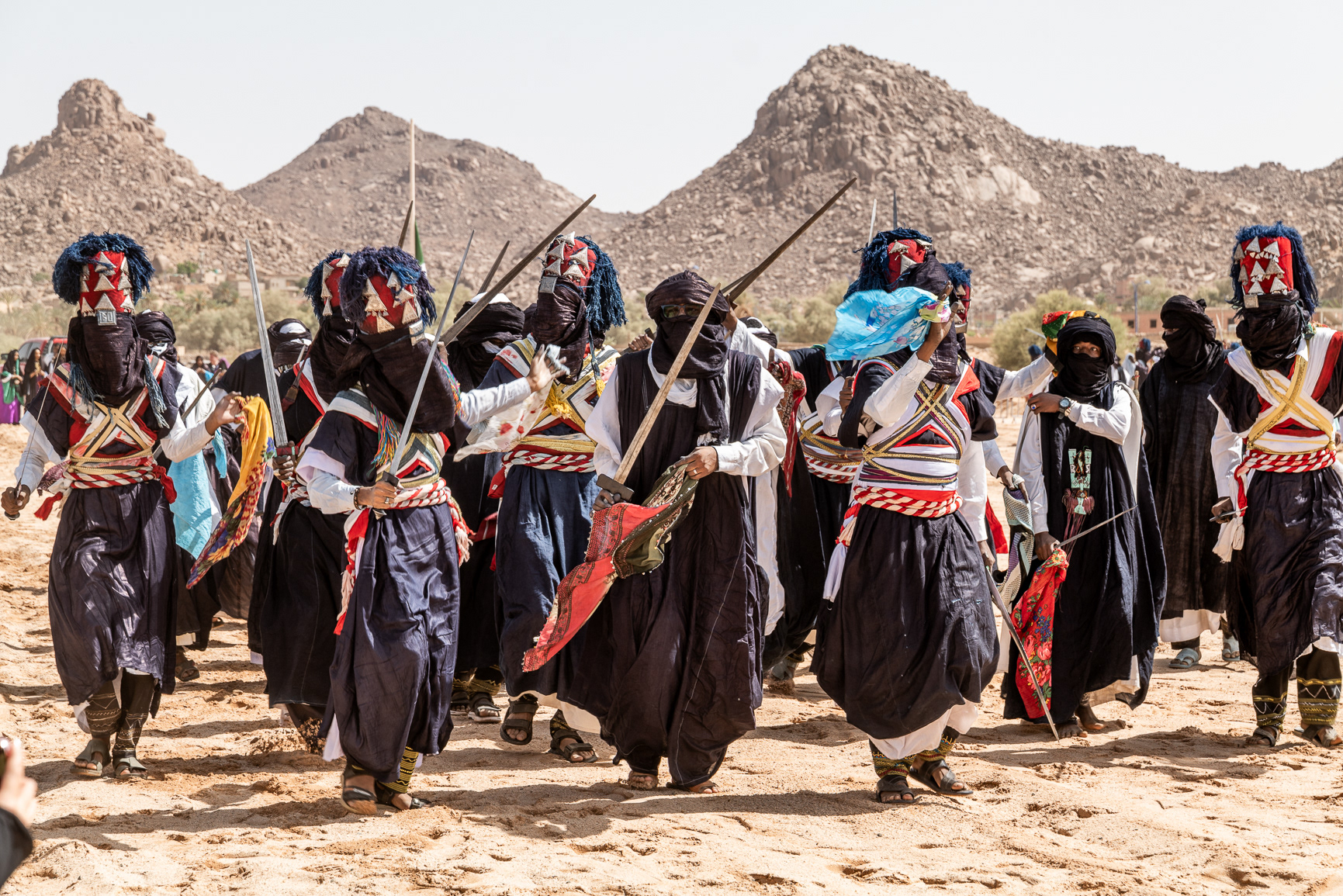
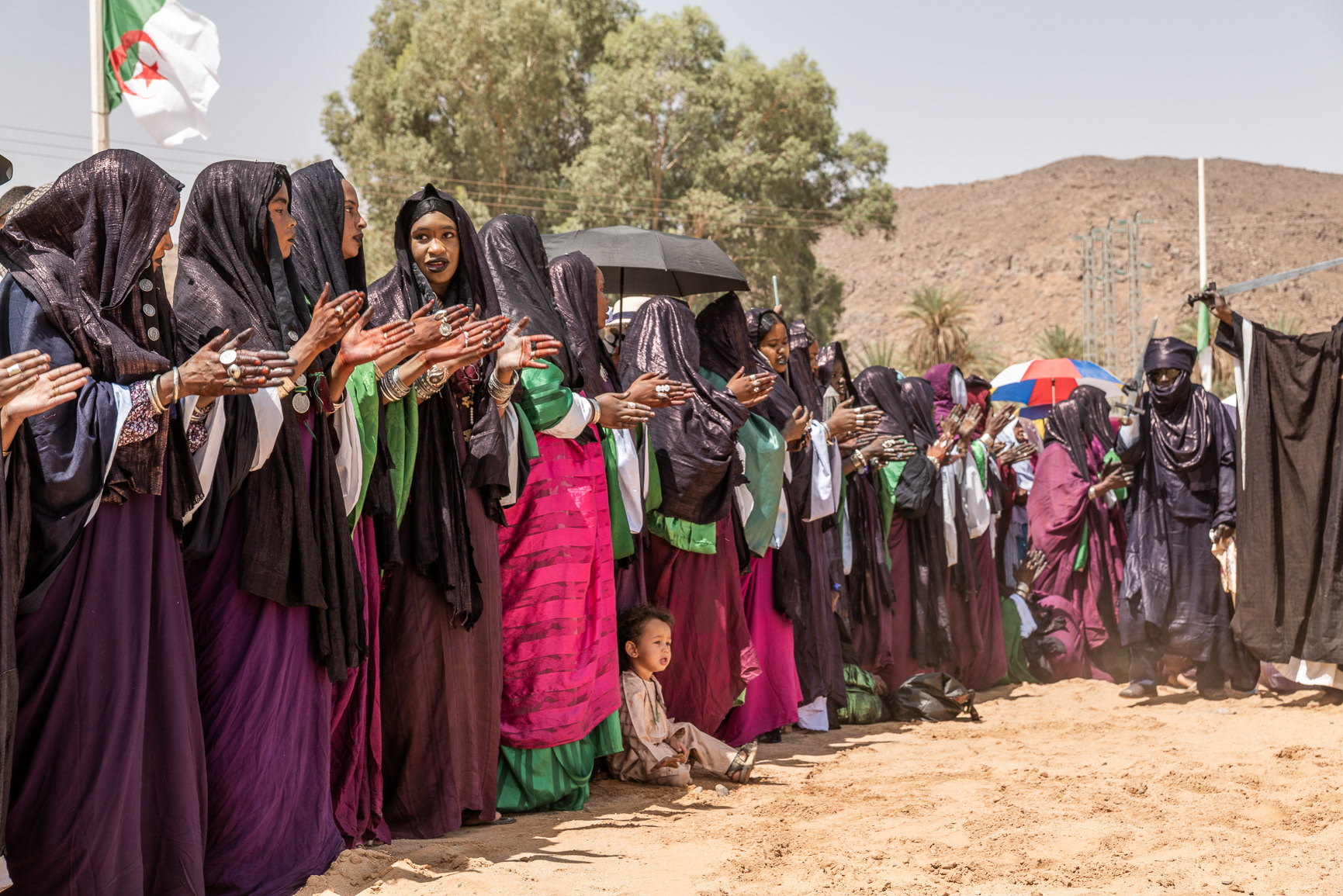
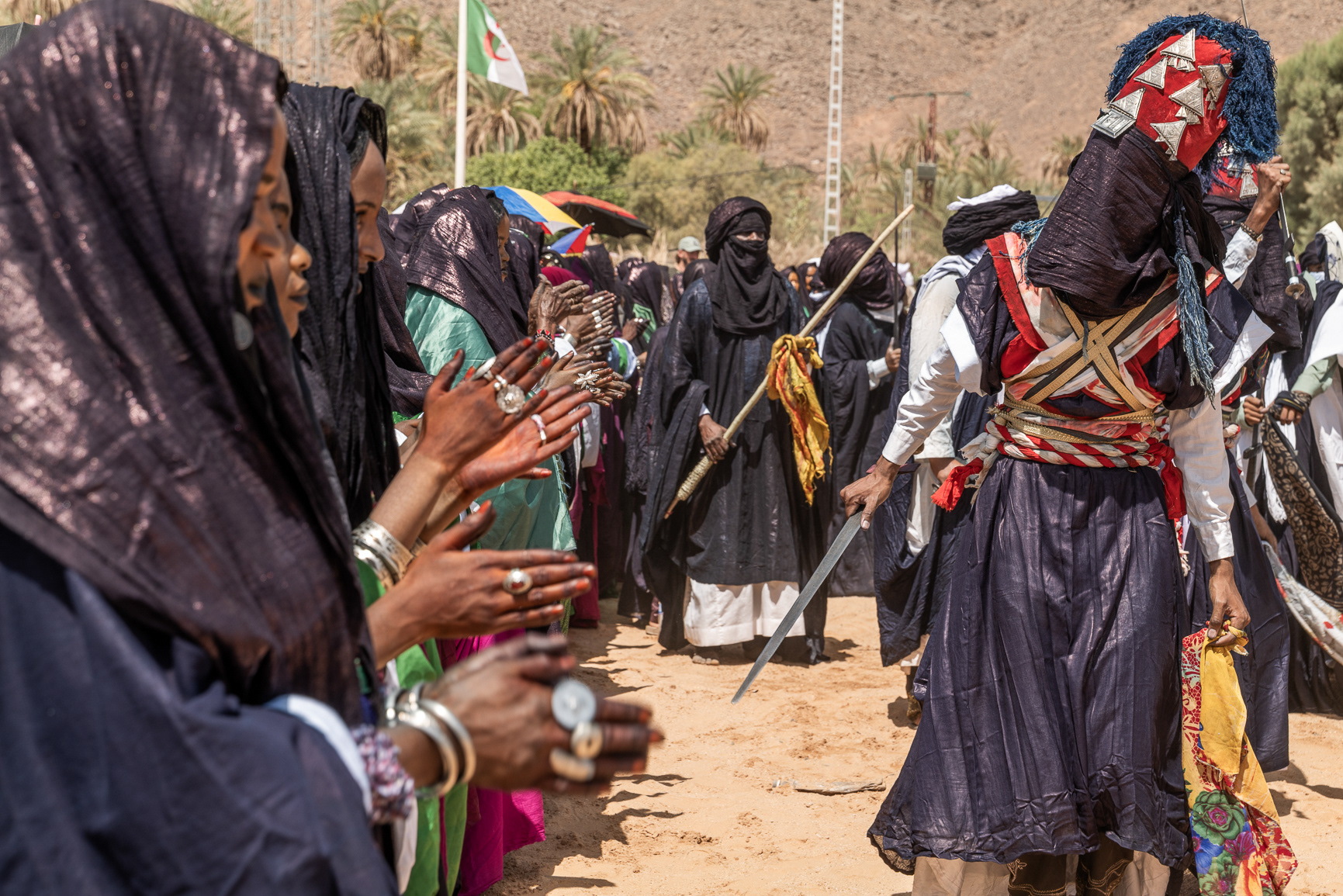
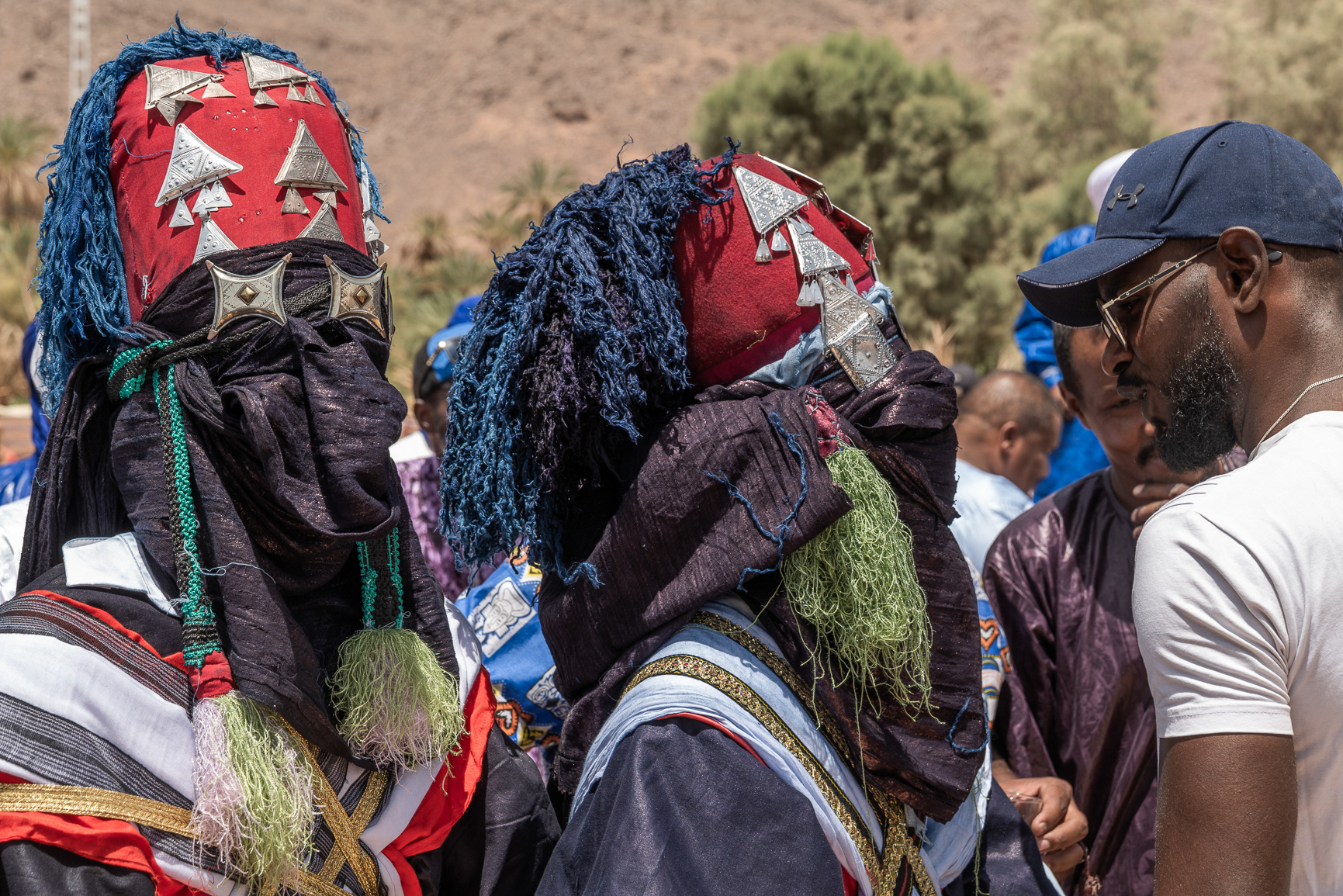
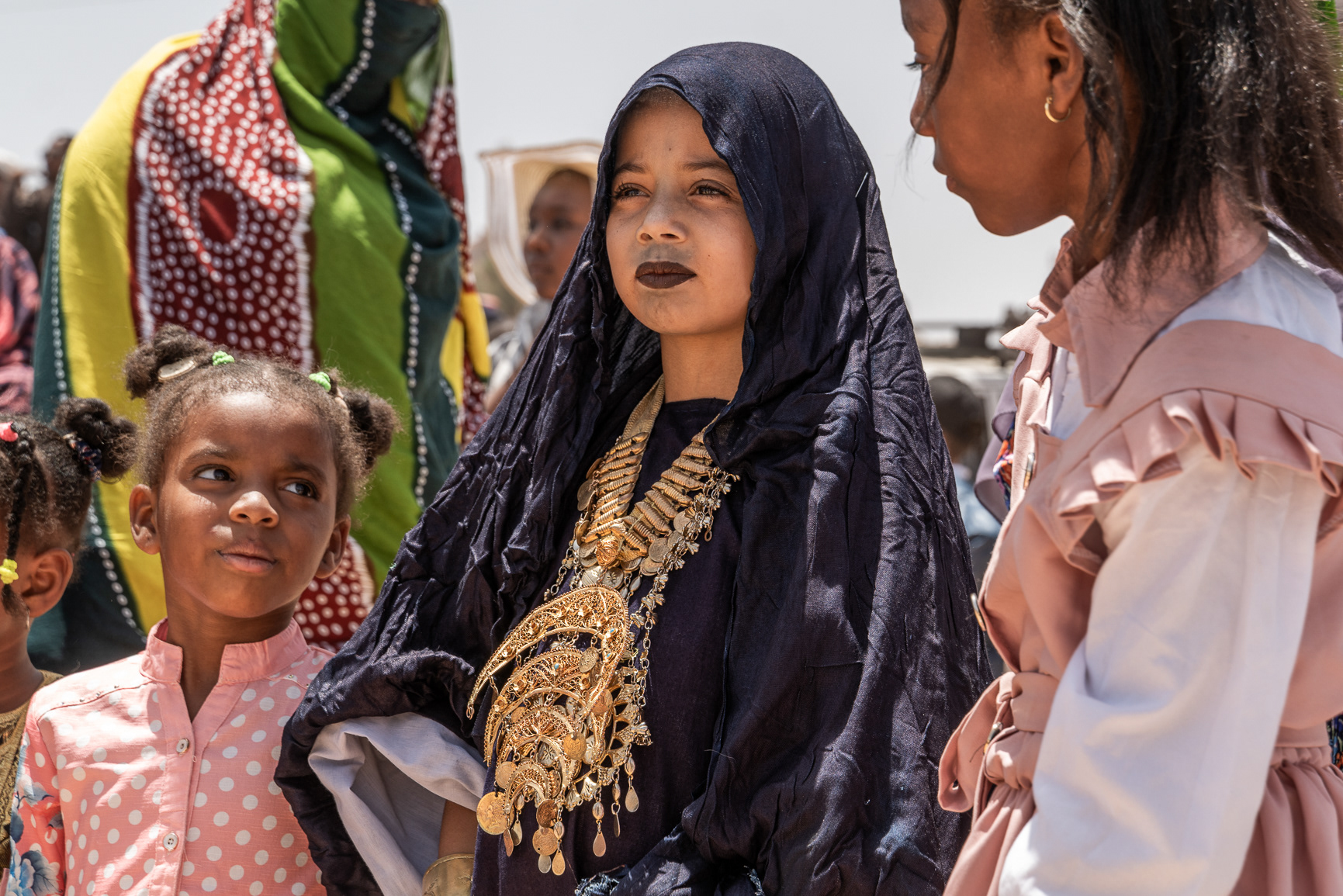
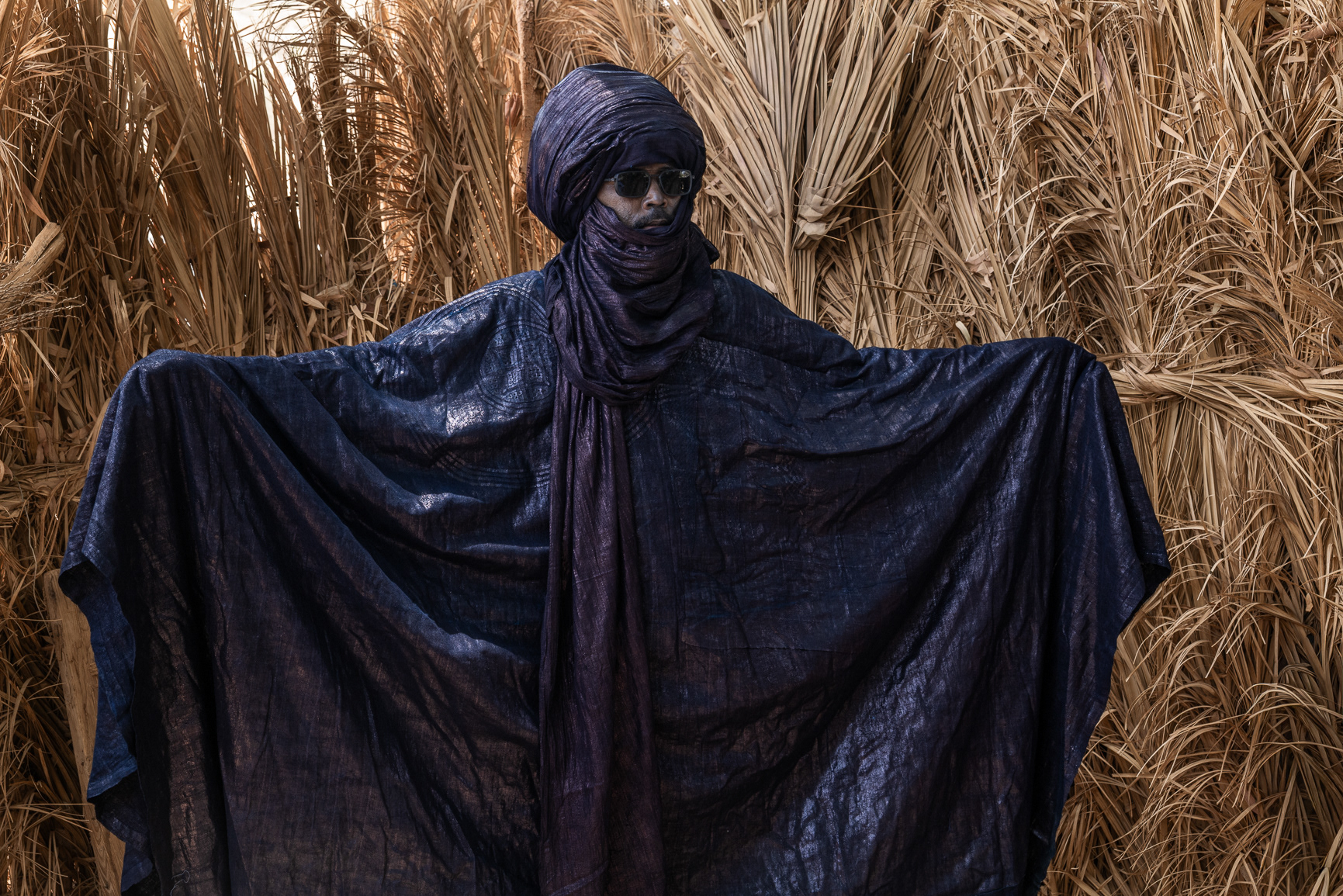
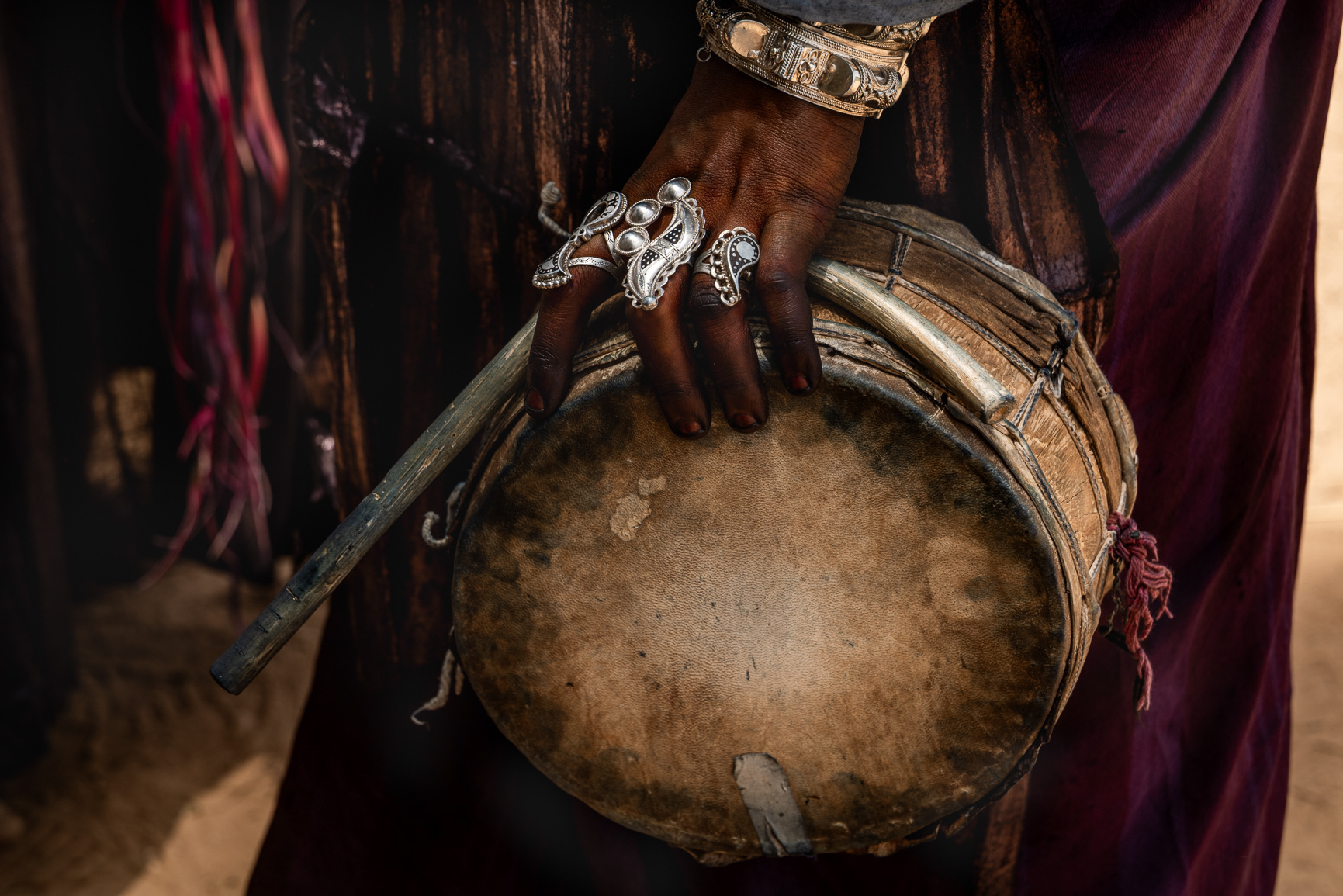
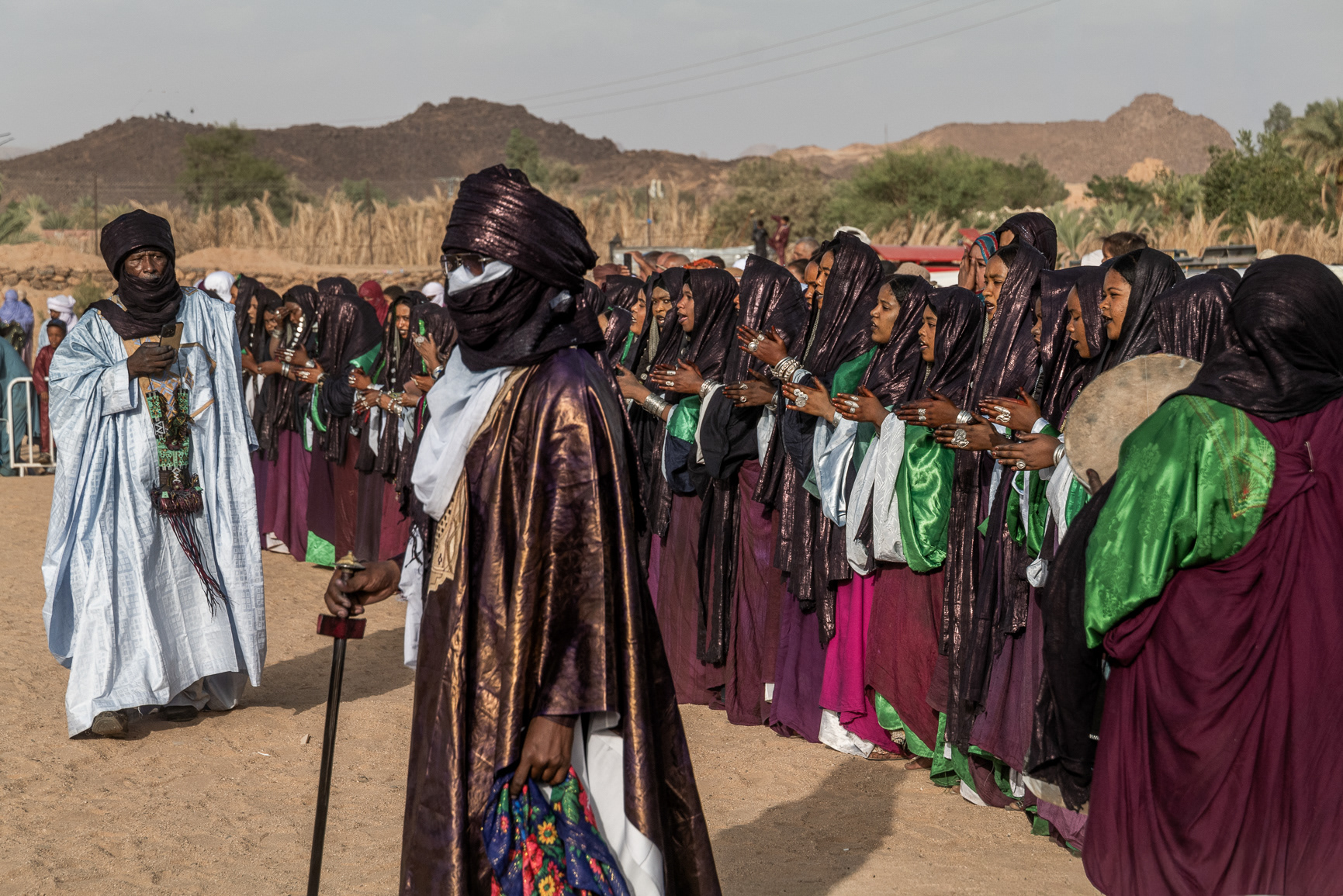
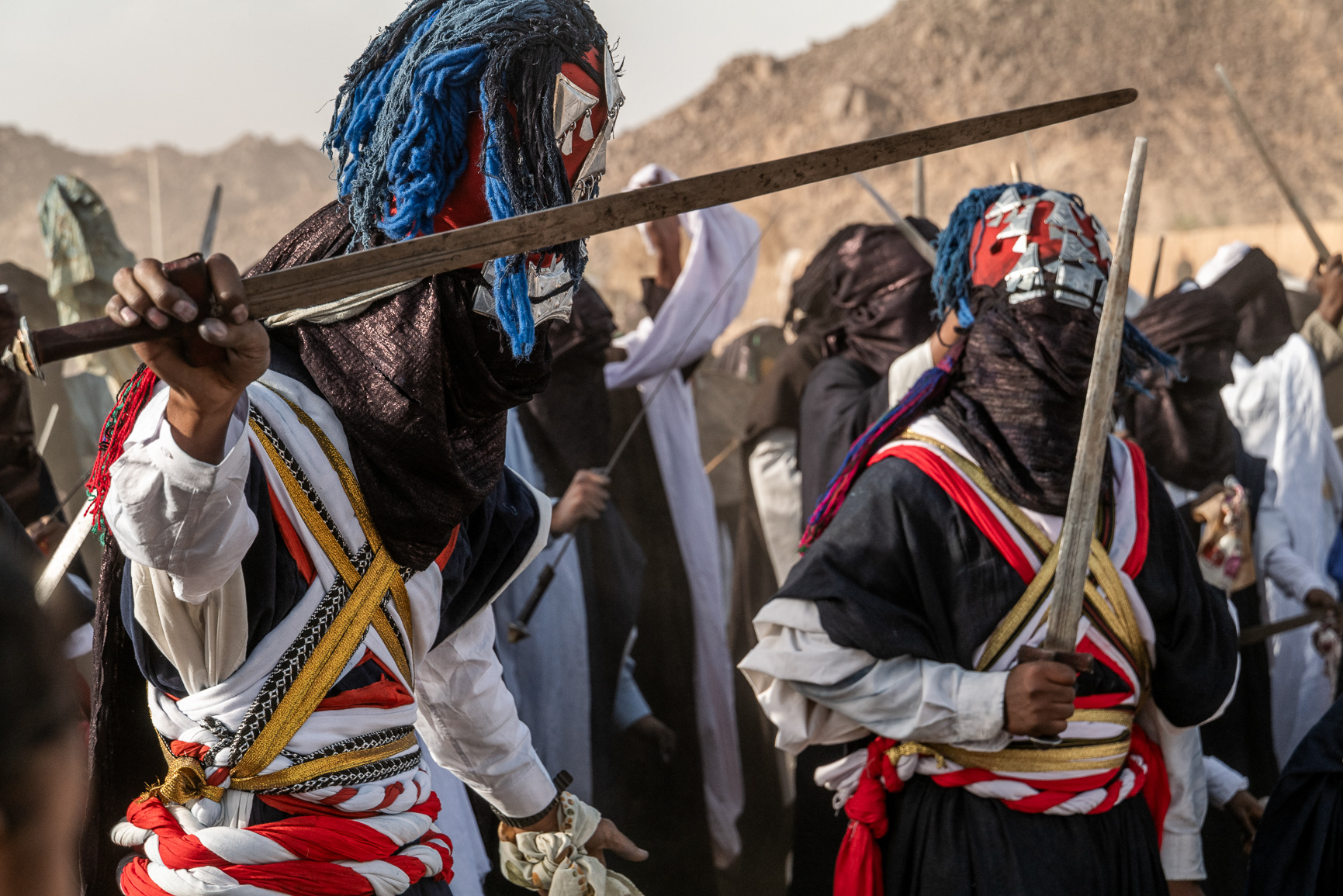
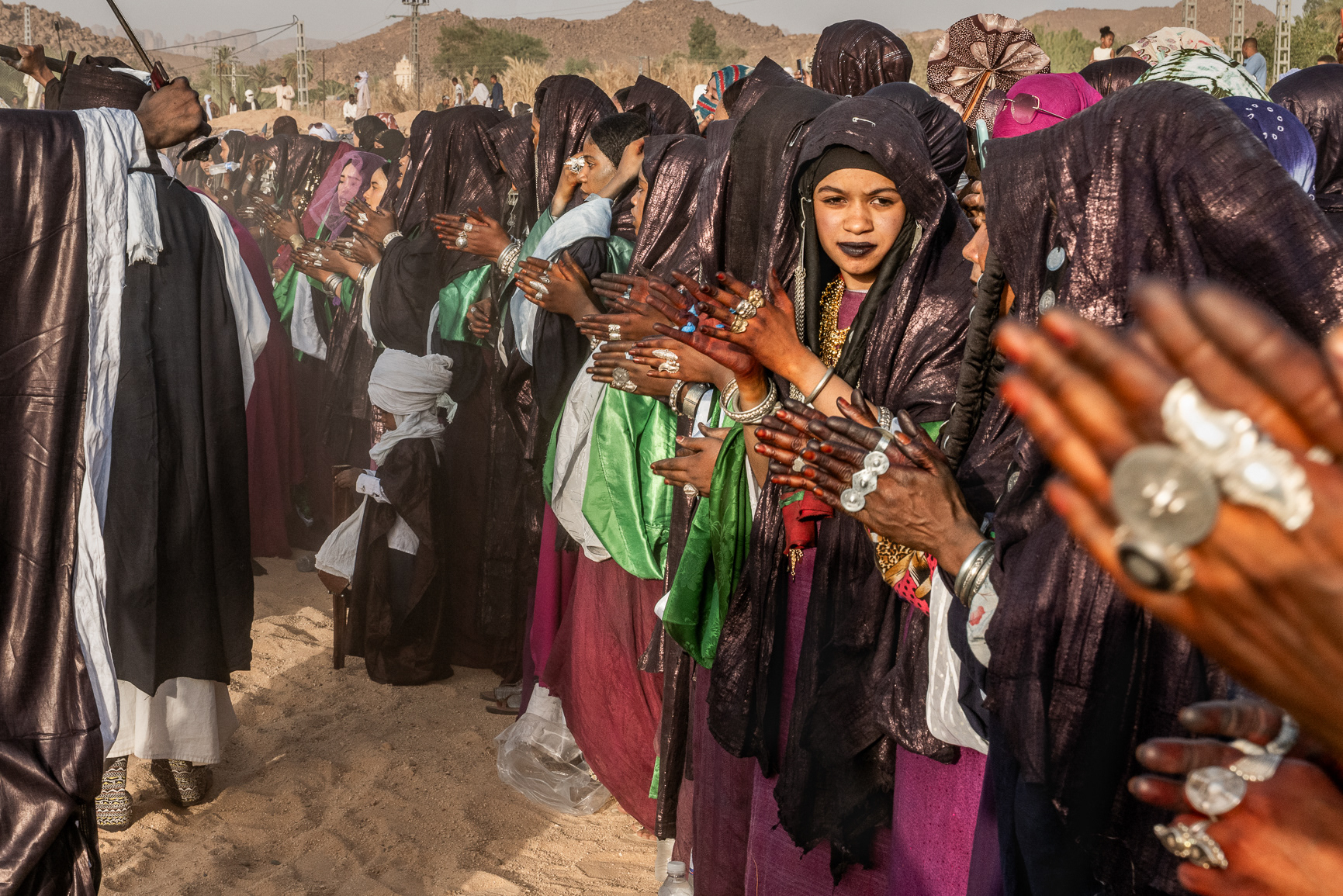
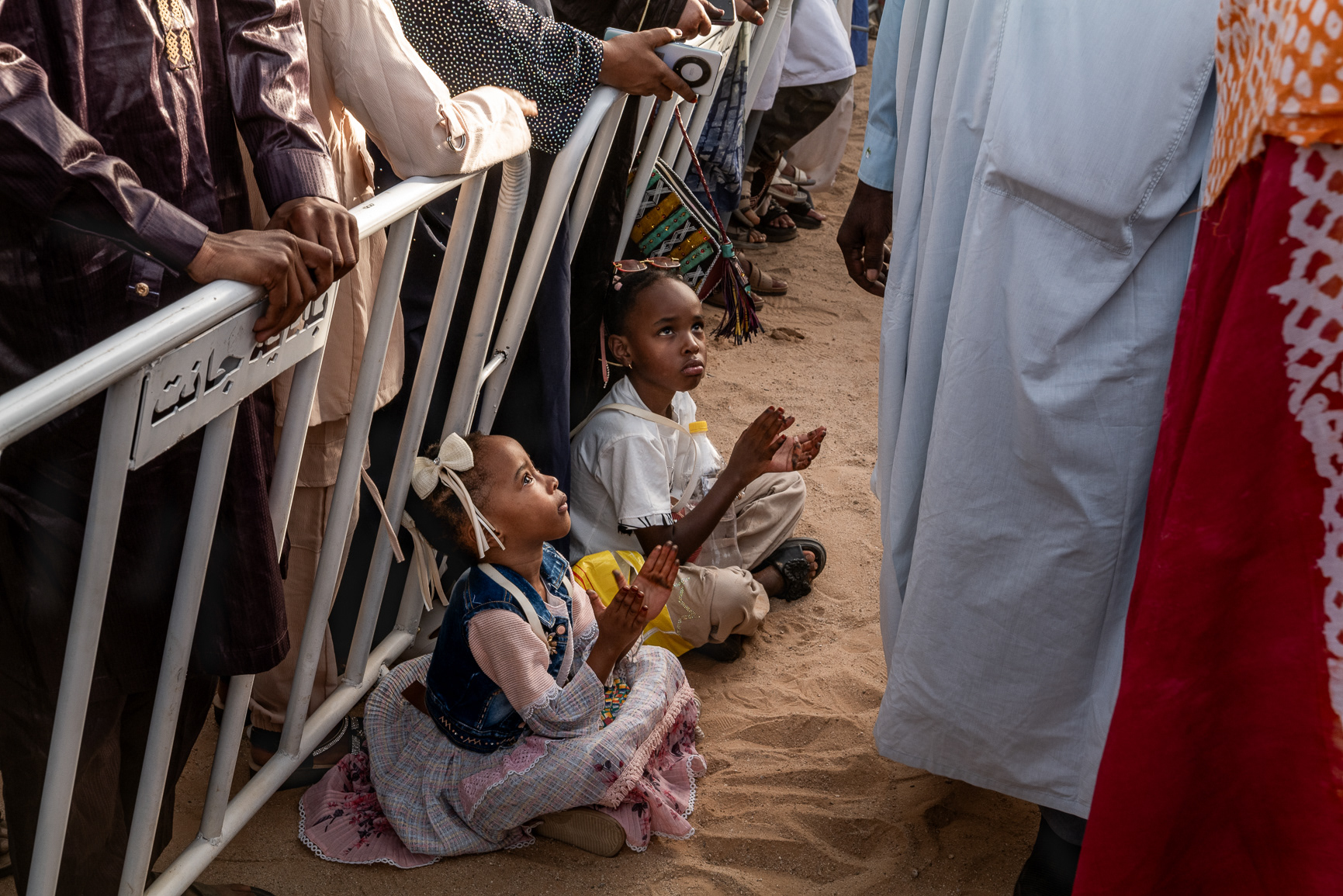
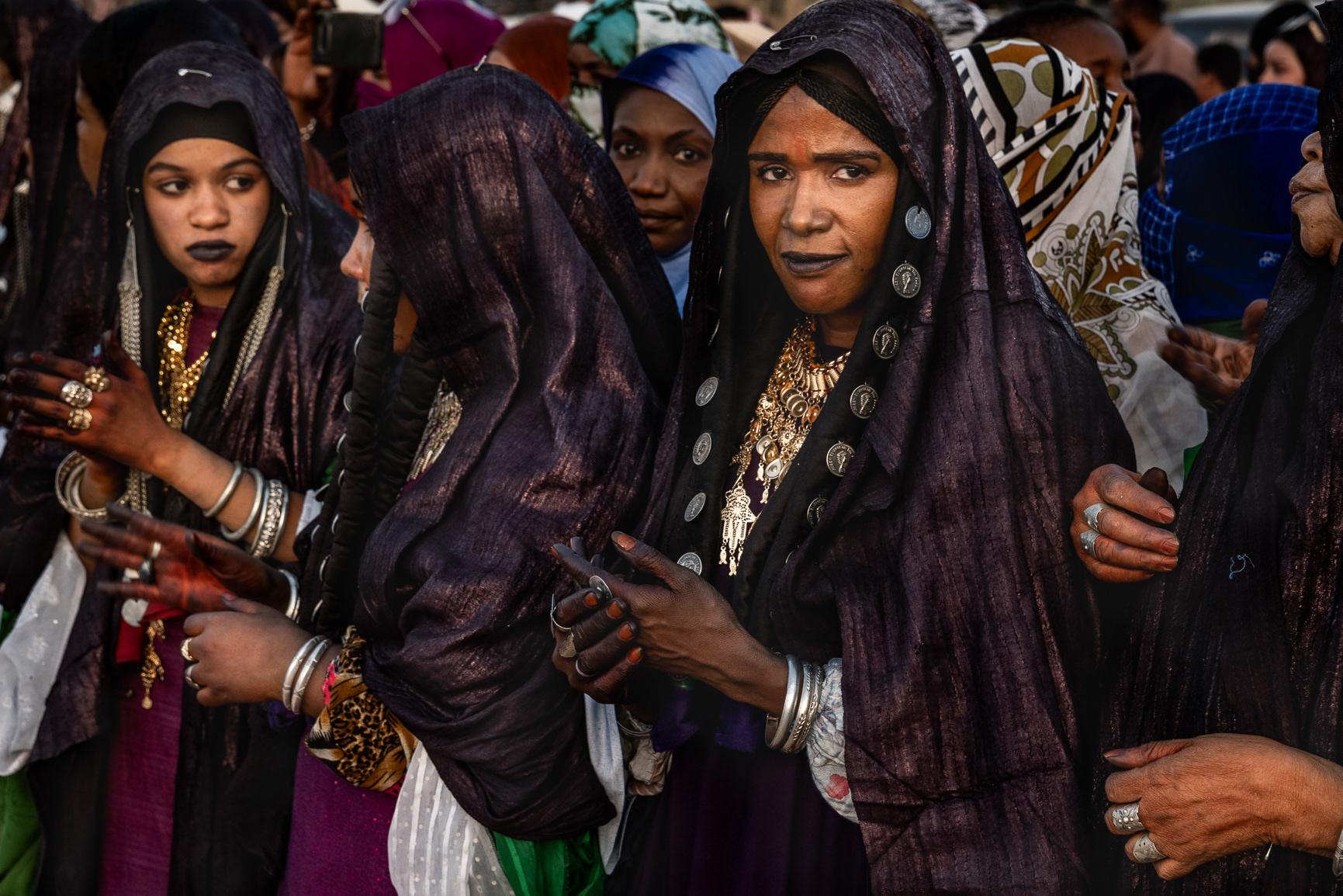
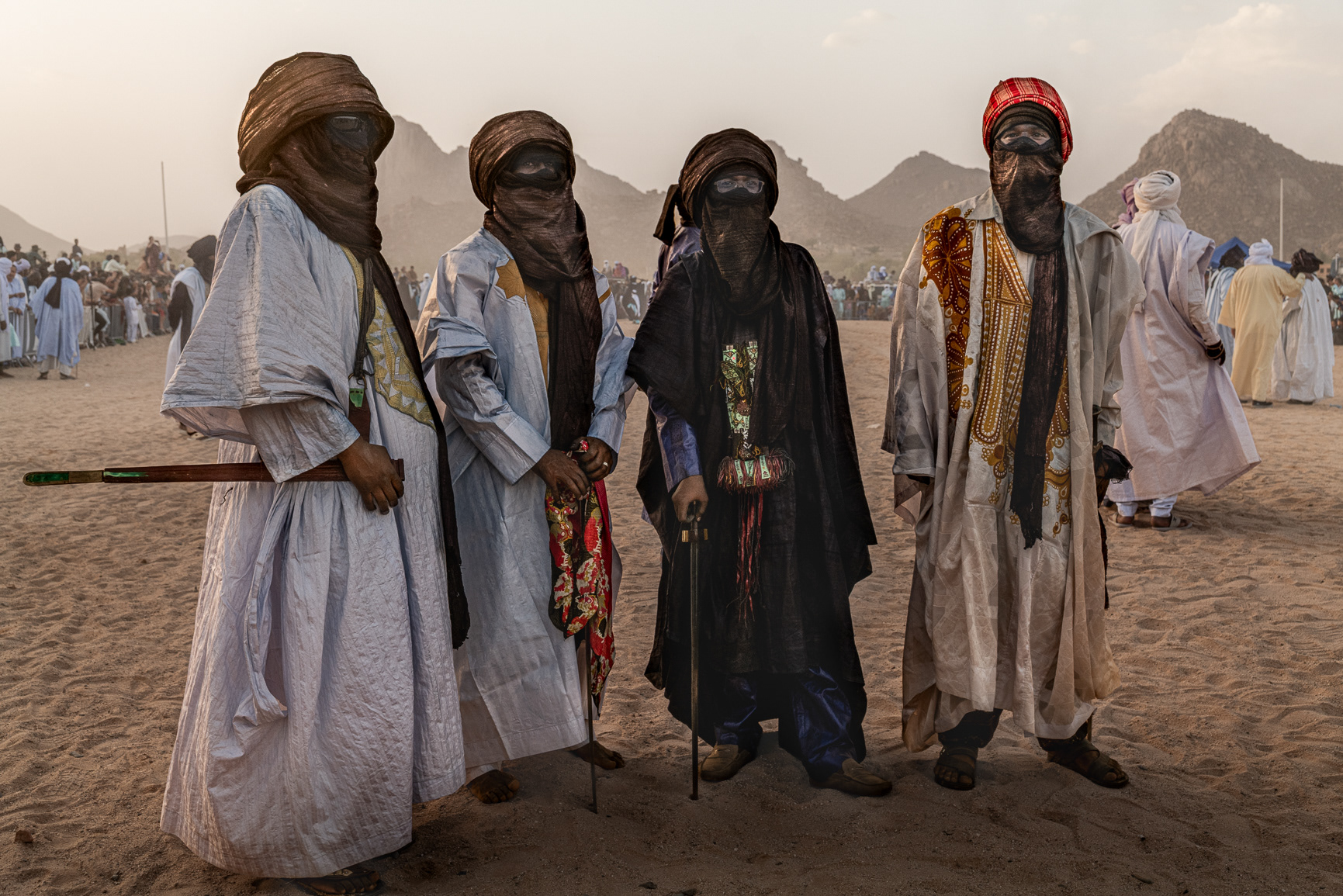
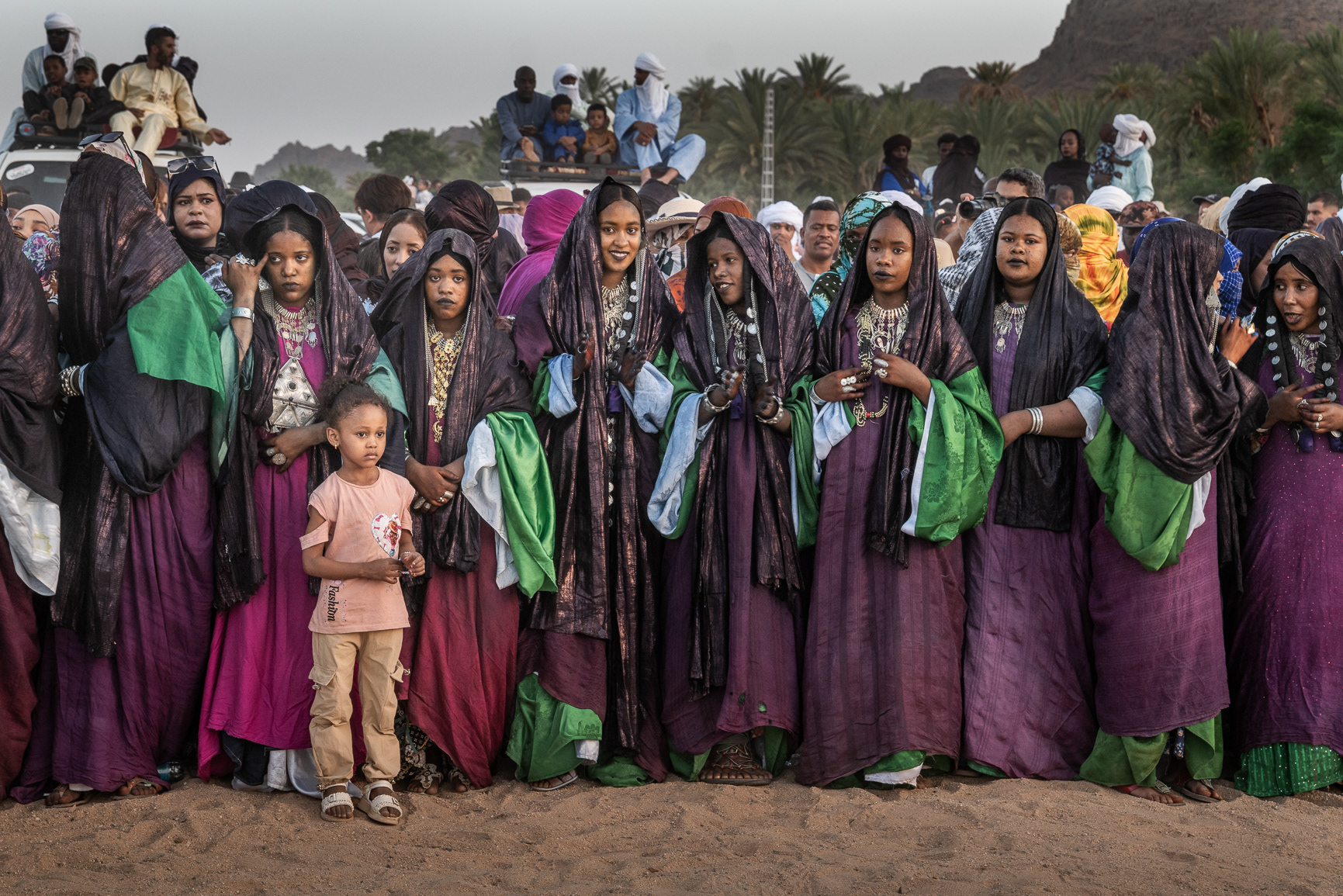
Algeria's Sebeïba We'd heard about an ancient Tuareg ritual from North Africa, and last year we finally got to see the latest Sebeïba, held in the southeastern Algerian Sahara. The ceremonies are carried out by two communities living in Djanet, an oasis town, over ten days during the first month of the Islamic lunar calendar. Turns out it's one of the oldest cultural events in the Sahara — it's survived for 3,000 years and is a cornerstone tradition for the Tuareg people. The symbolism is all about the old clash between tribes: the dancers hold a sword in one hand, standing for battle, and a piece of cloth in the other, standing for peace, moving in steady steps to the beat of drums. The women around them carry the dance forward with songs and the sound of the ganga, the traditional tambourine; for the occasion they wear makeup that sharpens the line of the eyes and brightens the cheeks with red ochre. The men's outfits include a black headpiece that hides the face, a long shirt, and an indigo tunic striped in red, blue and black. We were told two versions of how the festival began: a biblical one, where it was set up to celebrate peace after Moses defeated the Pharaoh in the story of the Exodus; and a historical one, where it commemorates an old rivalry between the rival communities — or a peace pact between two Tuareg tribes once at war. Taken as a whole, the ritual is still a core marker of cultural identity for the Tuareg people of the Algerian Sahara. Festival Tuareg Sapevamo di un rituale molto antico dei Tuareg del Nord Africa e lo scorso anno siamo riusciti ad assistere all'ultima Sebeïba, svoltasi nel sud-est del Sahara algerino. Le cerimonie sono praticate da due comunità che vivono a Djanet, città oasi, durante dieci giorni del primo mese del calendario lunare islamico. Abbiamo scoperto che è uno degli eventi culturali più antichi del Sahara: sopravvive da 3.000 anni ed è una tradizione cardine del popolo tuareg. Nella simbologia c'è lo scontro tra tribù: i ballerini tengono in una mano una spada che simboleggia la battaglia e nell'altra un pezzo di stoffa che simboleggia la pace, muovendosi a passi cadenzati al ritmo dei tamburi. Le donne che li circondano accompagnano le danze con canti e il suono della ganga, il tamburello tradizionale; per l'occasione sfoggiano un trucco che esalta il taglio degli occhi e ravvivano le guance con l'ocra rossa. L'abbigliamento degli uomini include un copricapo nero che nasconde il volto, una lunga camicia e una tunica indaco a strisce rosse, blu e nere. Ci hanno raccontato due versioni sull'origine della festa: una biblica, secondo cui fu istituita per celebrare la pace dopo che Mosè sconfisse il Faraone nella storia dell'Esodo; e una storica, secondo cui commemora un'antica rivalità tra le comunità rivali oppure il patto di pace tra due tribù tuareg un tempo nemiche. Il rituale nella sua integrità resta un fattore identitario fondamentale per il popolo tuareg del Sahara algerino.